
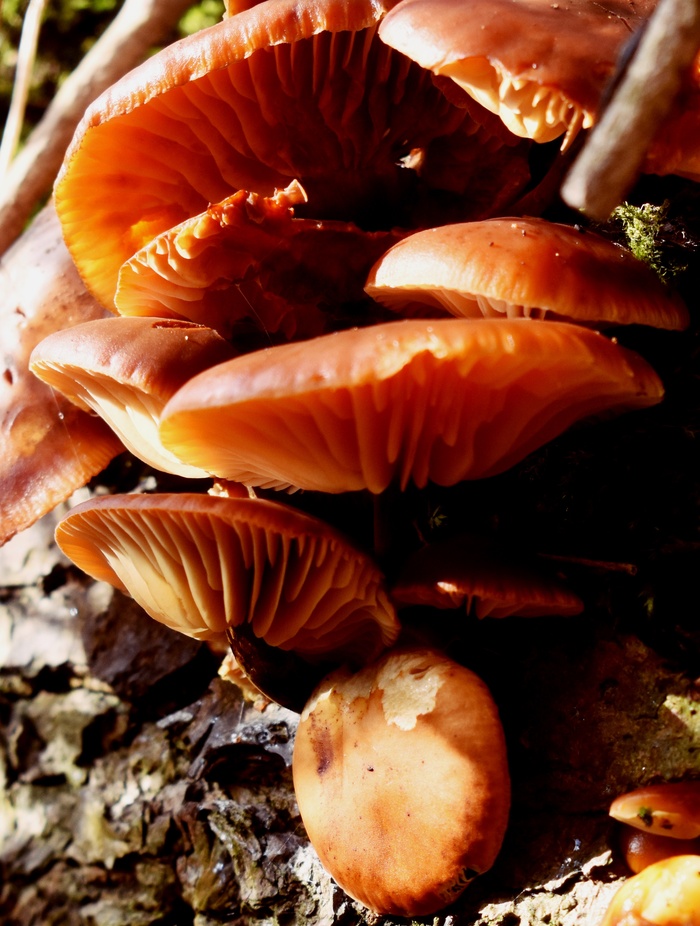
So in today’s foraging walk I couldn’t find much initially. Just the same old grey and muddy nature around me, waiting for spring to come with all her goods.
And then, as I was losing hope, I came across the wonderfully orange and bright velvet shank growing on a bit of dead wood!
I was super excited to get a specimen of it and take it home to investigate further.
Its latin name, Flammulina velupites, refers to the fiery orange cap and the velvety stem. This beautiful little mushroom grows on deciduous dead tree stumps (or diseased trees) and, although it has a slightly slimy cap, its medicinal and culinary uses more than make up for it, especially considering that it grows in the middle of winter when nothing else is available.
So, first things first. Identification:
- Flammulina velupites grows on dead tree stumps, such as elm and oak.
- In the UK it grows between November and March, when little else is available, making it one of the easiest mushrooms to identify
- The stem is thin, initially yellow, becoming brown and even black with age and more velvety in texture. Most importantly THERE IS NO SKIRT ON THE STEM. If you find a mushroom looking like velvet shank that has a skirt on the stem or the remnants of one, it might be the deadly Galerina marginata so be extremely careful and thorough in your identification.
- The cap can range from a light yellow to a deep brown depending on age of the fungus.
- It has a white spore print whereas the spore print of Galerina marginata is brown.
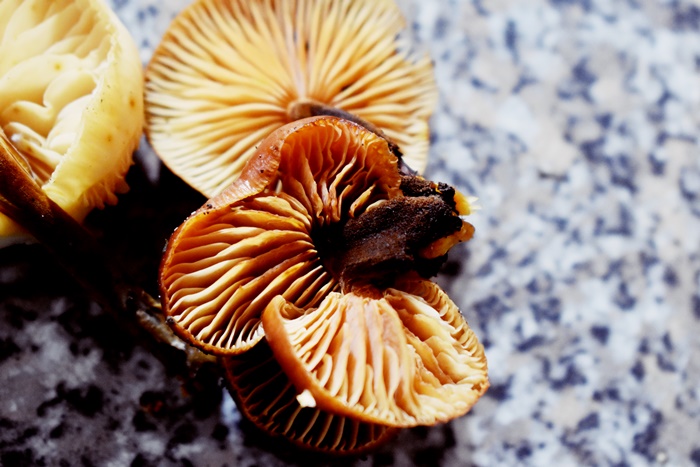
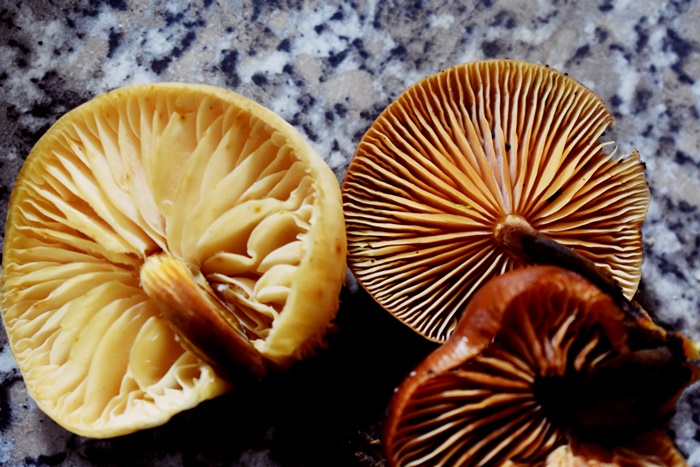
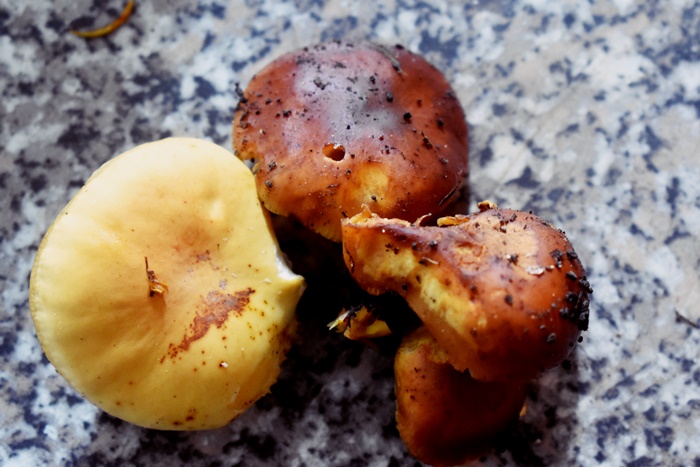
Now that we are done with the most important part- identificatio, let’s move on to some very interesting facts about this little mushroom.
The velvet shank can survive winter frosts as it can be frozen whole and still live after thawing. It even produces more spores when it melts!
As far as medicinal uses go, according to Healthline velvet shank has many nutrients that are useful to humans.
To start off, velvet shanks are a good source of fiber and rich in B vitamins, including niacin, pantothenic acid, and thiamine.
In addition, they contain a multitude of antioxidants, specifically:
- gallic acid
- quercetin
- ferulic acid
- caffeic acid
- chlorogenic acid
- ellagic acid
- pyrogallol
As far as cancer goes, some test-tube studies show that enoki mushrooms could decrease the growth and spread of several types of cancer cells.
Velvet shanks are also good for the brain as animal and test-tube studies suggest that they could improve learning and memory by altering levels of certain antioxidants and neurotransmitters.
Although impressive enough by the fact that they grow in the middle of winter and have many health benefits, their taste is also fantastic. There are many ways you can cook this beautiful little mushroom. Check out my velvet shank stew, dehydrated velvet shank risotto and velvet shank and thyme oil cauliflower soup.
 (Fer)mental Greens