
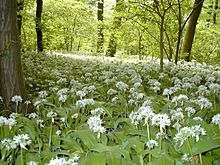
It is here, it is here, it is here!
Wild garlic is out and foragers all over are getting all excited about it.
And for good reason. Wild garlic, aka Allium ursinum is one of the forager’s favorites- easy to identify with a strong taste and abundant in its growing habits, wild garlic is a phenomenal ingredient to play around with.
But first things first- how do we identify wild garlic?
Well, the first thing to think about is the season. Wild garlic leaves are out in early to mid spring and they will have flowered by late spring, at least in the UK. Not a lot is out at that time of the year. Wild garlic also tends to grow in woodland, sometimes completely covering the forest floor. Some plants you might confuse it with are Italian lords and ladies and lily of the valley. But Italian Lords and Ladies have two pointy ends at the bottom of the leaf whereas wild garlic is lanceolate, and lily of the valley tends to grow two leaves from the same stem whereas wild garlic always only grows one leaf per stem. If in doubt, leave it out as both Italian lords and ladies and lily of the valley are toxic. The last identification criterion is that neither lords and ladies or lily of the valley smell like garlic, whereas wild garlic’s smell is unmistakable.
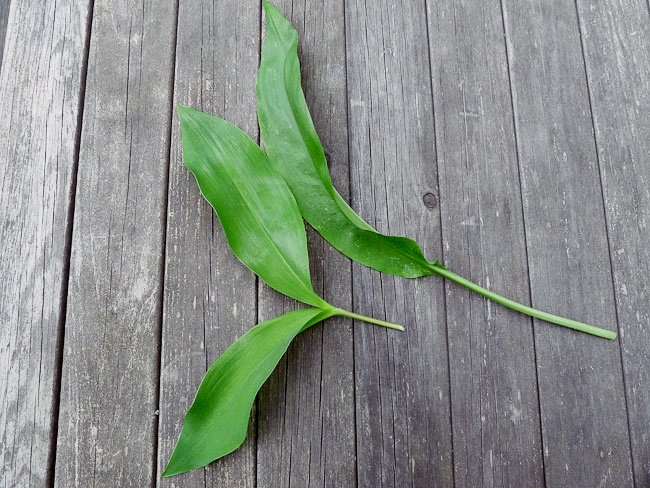
Image credit: Paul Kirtley
According to the Woodland Trust, wild garlic is an ancient woodland indicator – meaning that this species can be used to aid identification of ancient woodland sites. The second half of the Latin name, ursinum, means “of the bear” and refers to the folkloric belief that bears eat the wild garlic bulbs to regain their strength after hibernation.
Medicinal uses
According to PFAF “Ramsons has most of the health benefits of the cultivated garlic, A. sativum though it is weaker in action… It is particularly effective in reducing high blood pressure and blood cholesterol levels. …All parts of the plant can be used, but the bulb is most active. The plant is anthelmintic, antiasthmatic, anticholesterolemic, antiseptic, antispasmodic, astringent, cholagogue, depuritive, diaphoretic, diuretic, expectorant, febrifuge, hypotensive, rubefacient, stimulant, stomachic, tonic and vasodilator. Ramsons ease stomach pain and are tonic to the digestion, so they can be used in the treatment of diarrhoea, colic, wind, indigestion and loss of appetite. The whole herb can be used in an infusion against threadworms, either ingested or given as an enema. The herb is also beneficial in the treatment of asthma, bronchitis and emphysema. The juice is used as an aid to weight loss and can also be applied externally to rheumatic and arthritic joints where its mild irritant action and stimulation to the local circulation can be of benefit.”
Culinary
Wild garlic is a fantastic ingredient to play with. Abundant, flavourful and aromatic, it can be added to soups, stews, stir fries and ramen dishes (just ake sure you add it towards the end to not lose its fragrance). You an also make wild garlic butter but my favorite method to preserve this fantastic green is to actually lactoferment it. This way it lasts about 1,5+ years!! Check out the recipe here.
 (Fer)mental Greens