
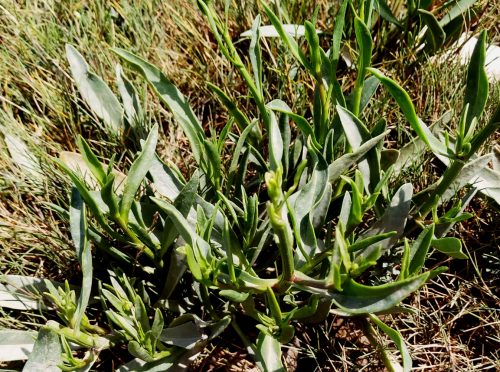
On my foraging walk last week in Silverdale, I happened upon a lovely coastal plant called Sea Aster (Tripolium pannonicum). The name of the plant come from the Greek “‘Αστρᨔ which means “star” because of the shape of the flowers that look like stars.
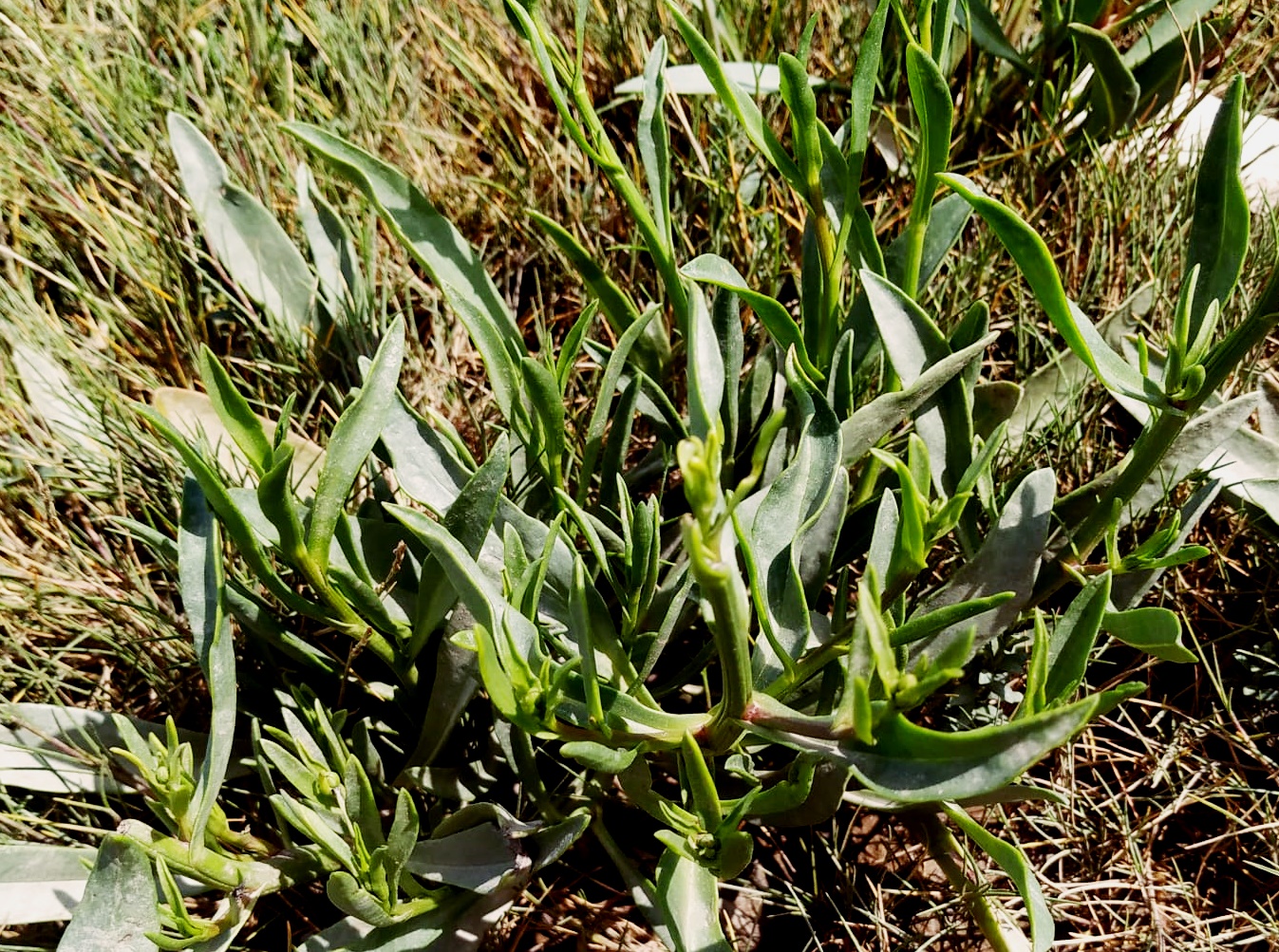
Growing prolifically on the shore inbetween rocks, sea aster is characterised by fleshy, long, lanceolate leaves that point upwards and it grows in clumps. Available from May to September, sea aster is also a great source of nectar for late pollinators and one of the few plants to be found on the shores for such a long time over the summer.
The leaves become purple as they approach the base and they are easy to identify. The only other plant it could be confused with would be sea lavender but the latter does not taste very good and is not toxic so there is not much harm to be done by wrong identification.
In pre-industrial Sweden sea asters were one of many wild species gathered for stews and soups. However, these plants were also considered fodder for livestock and may only have been gathered for human consumption during times of famine.
Medicinal
English herbalist John Gerard (1545–1612) recommended sea aster as a wound herb,but there are no records to indicate how useful the plant was to coastal communities in this regard. Gerard also prescribed sea aster for dropsy and as an antidote to poisoning
There are not many folklore references on sea aster so if you know any info on this delicious plant’s folklore or history please comment!
Culinary uses
This is where the fun with this lovely plant begins! The fleshy leaves taste a bit like iron, a bit nutty, a bit sweet and a bit salty, a combination that put my mind into high gear on how to prepare this lovely plant!
Due to their fleshiness, the plant offers itself to be prepared in a myriad ways. Seaside stir fries, coastal sushi, coastal stew, fried in butter or oil, as an accompaniment to fish, as a herbal salt or pickle, the possibilities are literally endless. Take a look here for a pickling recipe and have fun working with this lovely plant!
 (Fer)mental Greens