

One of the most asked questions on foraging forums (and for good reason) is whether someone has correctly identified wild parsley.
Also called cow parsley, wild parsley grows prolifically in hedgerows, woodland edges and close to pasturelands and has a delicate scent between parsley and aniseed.
Wild parsley is best left alone for beginner foragers because of the resemblance it bears to poison hemlock. They are both in the carrot family, characterised by a taproot, feathery foliage and white flowers shaped in an umbel.
According to Healthline “Hemlock poisoning occurs after ingesting any part of the plant, such as the seeds, flowers, leaves, or fruits. All parts of this plant contain toxic alkaloids that can be fatal even in small amounts. The alkaloids can affect nerve impulse transmission to your muscles, eventually killing you through respiratory failure. Even touching this plant may cause a skin reaction in some people. To date, there is no antidote. The leaves are particularly poisonous in the spring, up until it produces flowers. The roots of poison hemlock can easily be mistaken for wild parsnips, while the leaves can be mistaken for parsley. This is the primary culprit for accidental poisoning.”
For this reason, if you are not COMPLETELY SURE that what you have is wild parsley, don’t even touch the plant as even the sap can be dangerous.
So what should you be looking for? What are the differences between poison hemlock and wild parsley?
Step number 1- Color
The stem in wild parsley can be purple, especially nearer the base but it is not blotchy. Hemlock stem can have purple blotches. Be careful though- if it is a young hemlock specimen it might not have any blotches so always go to step number two.
Step number 2- Stem
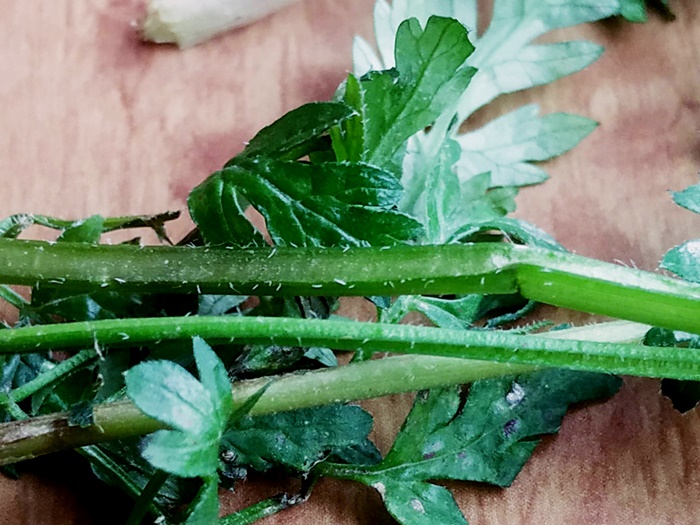
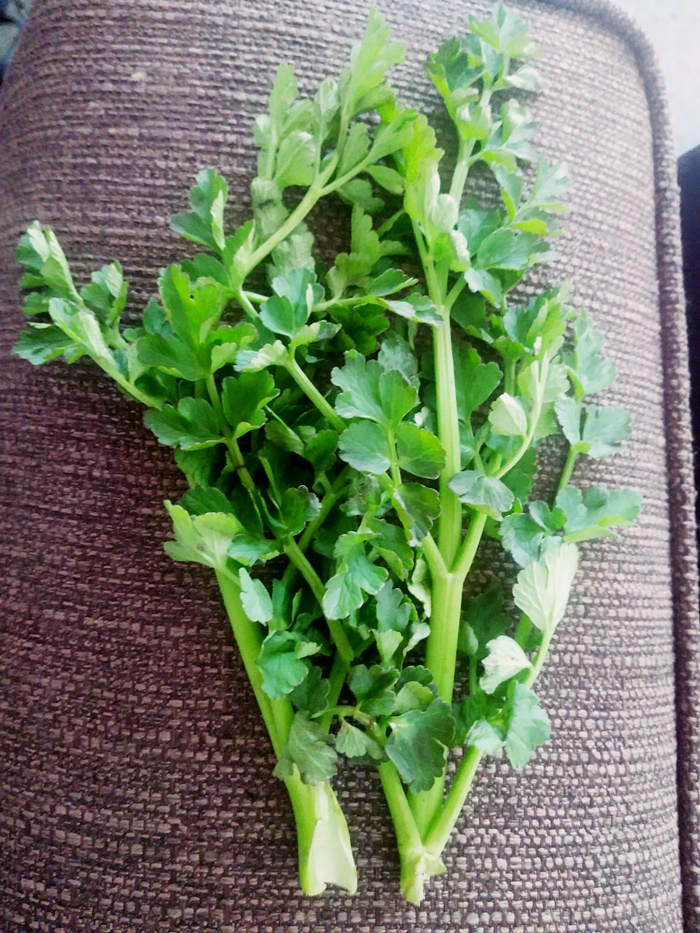
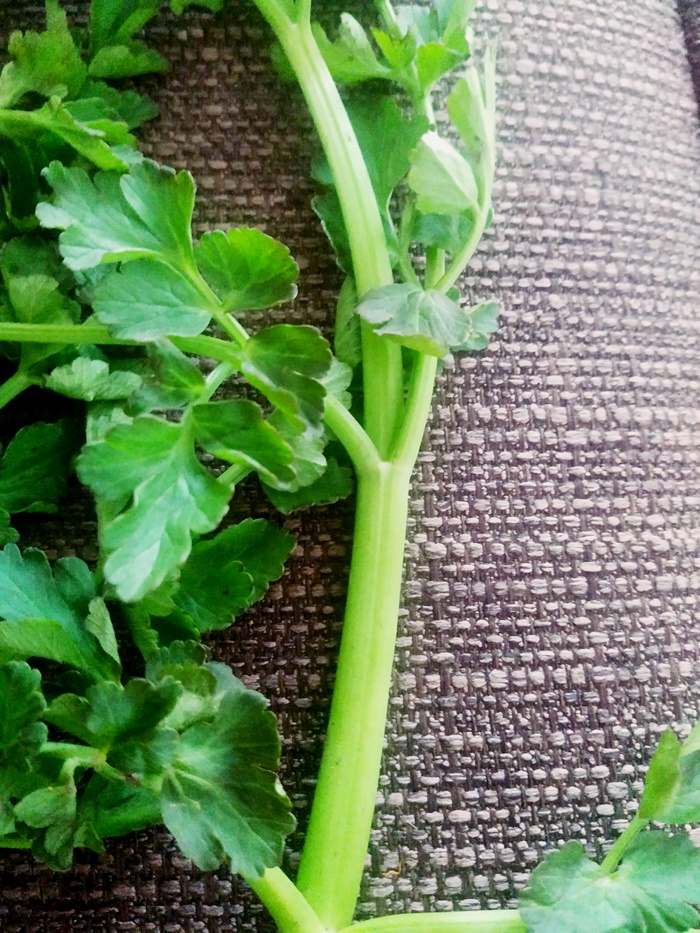
The stem for both wild parsley and hemlock is hollow. BUT wild parsley’s stem is shaped like a V with a hollow inside whereas hemlock’s stem is circular with a hollow inside. Also, cow parsley’s stem has fine hairs whereas hemlock’s stem is completely smooth.
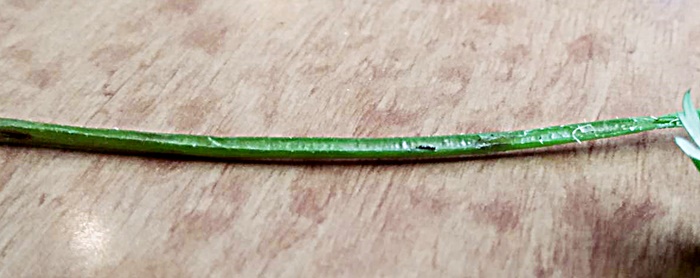
Below is a picture of hemlock water dropwort (Oenanthe crocata) which is also extremely poisonous to both livestock and humans. As you will not it is brighter green, completely hairless, thick and round which tells it apart from wild parsley.
Step 3- Smell
Wild parsley smells a bit like cultivated parsley although the smell is fainter. Hemlock smells like mouse urine. Even if you don’t know how mouse urine smells, I guarantee you that it is unpleasant and not at all reminiscent of parsley!
So there you have it. A basic guide to IDENTIFY wild parsley. If in any doubt DO NOT pick up this plant, especially since the taste of wild parsley is not quite something out of this world.
Keep safe and forage on!
 (Fer)mental Greens
In the pictures under step two… are those both Wild Parsley? They both appear to have the v shaped stem, but the one on the left doesn’t seem to have the fine hairs?
LikeLike
The light is not great and my phone’s camera is as good as a potato for taking close ups but yes, they are both wild parsley stems.
LikeLike