
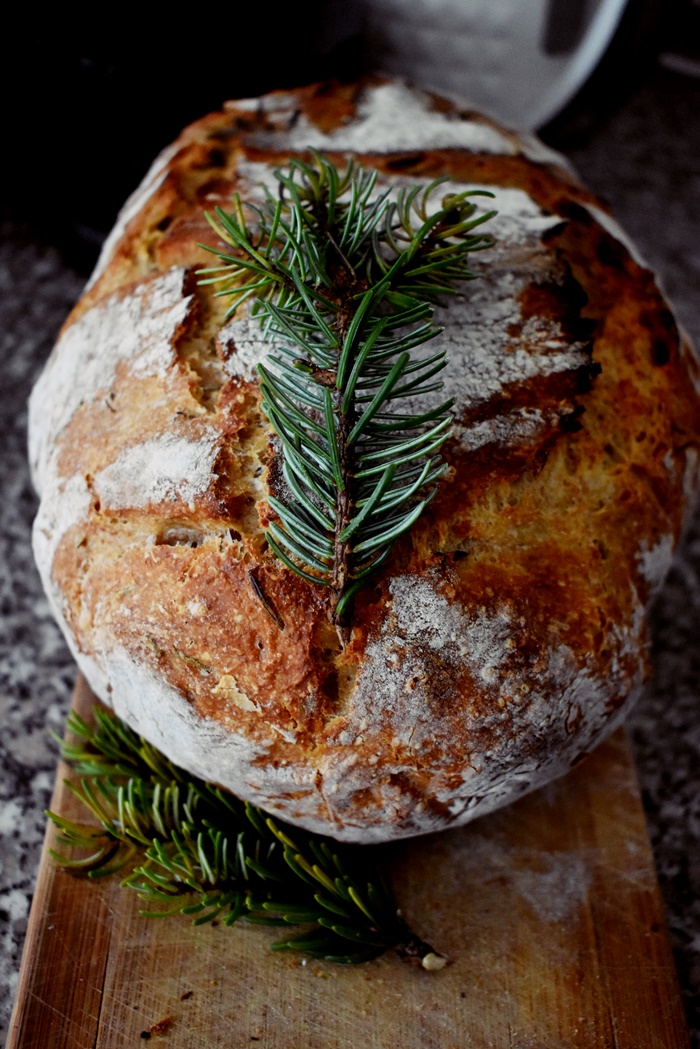
Following Saturday’s accidental spruce find, I was really excited to take a few branches home to play with (I tried to take the whole tree but it wouldn’t fit in the car 😦 )
So at home, I tried my hand at caramelised spruce tips (make for a fantastic candy), spruce ferments, spruce syrups and spruce teas. The rest of the spruce is now dehydrating to be used as a spice.
BUT
I also wanted to try and make a “Forest bread” that would have the coniferous taste at every bite. So I decided to include some spruce in my weekly sourdough bread.
I think I have mentioned before that I am better at eyeballing recipes rather than measuring and my sourdough adventures are no different (which may account for my many failures in this particular field.). The measurements below are approximations so don’t worry if you have a bit more or a bit less. If it is your first time making sourdough I advise you reduce the water content as really wet doughs are difficult to manage and shape.
Ingredients for 1 loaf:
- 250 g sourdough starter, bubbling and floating on water, ready to use
- 400 g strong white bread flour
- 200 g wholewheat spelt flour
- about 1,5 tbs salt
- 1 handfull of spruce needles
- 400 ml lukewarm water.
Steps:
- Make sure that your sourdough starter is active by taking a bit and placing it in a glass of water. If it floats then it is ready
- Mix flours with lukewarm water until smooth and leave for minimum 30′ to autolyse (develop the gluten strands).
- After it has autolysed add the salt and starter and mix well. The kneading time will depend on the protein content of your strong white bread flour (I recommend minimum 12 g/100g). For this recipe I kneaded for around 30 mins and laminated 4-5 times.
- Place a little bit of oil in a tub and place the dough in there. Leave in a warm place until it has doubled in size (time will depend on temperature), stretching and folding gently every 30-40 mins. Add the spruce needles in your 3rd stretch and fold. By the last stretch and fold the dough should be really elastic like here.
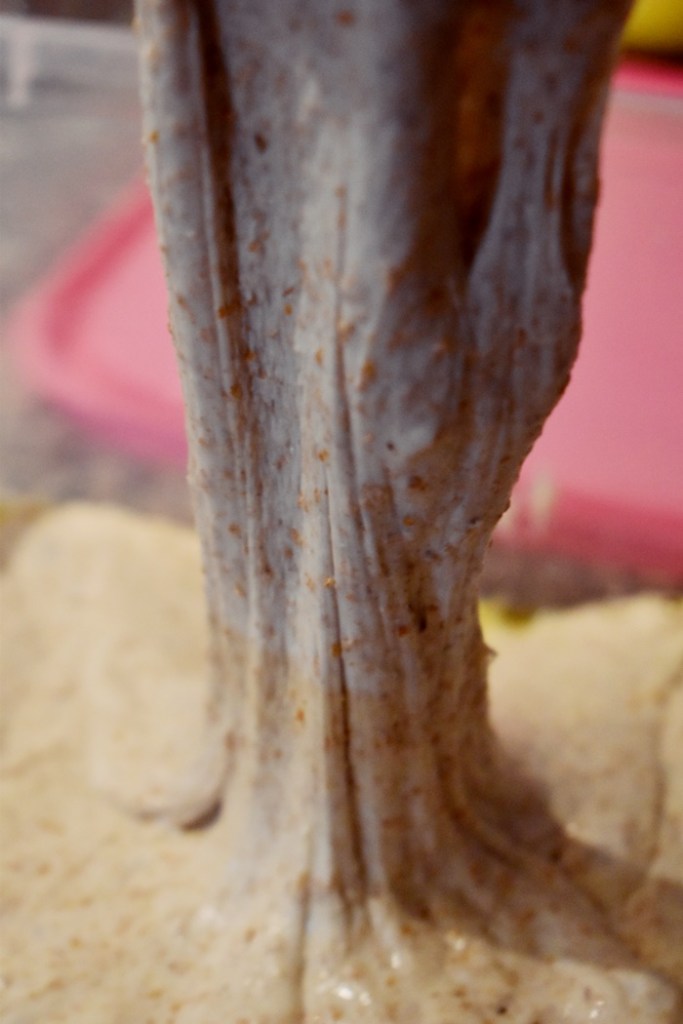
- If it is late in the day, I recommend putting the tub with the dough in the fridge to stay there and slowly ferment overnight. Otherwise, if it has doubled in size and you can see the bubbles through the tub your dough is ready.
- Preheat your oven and Dutch oven dish at the maximum temperature your oven has.
- Flour a surface and place the dough on the flour. Leave like this for 10 mins.
- After 10 mins shape your loaf into a boule or a battard and roll the dough as to create a skin. You can find many youtube videos on shaping a loaf.
- Many people then place the shaped loaf into a floured basket and leave for a while but for me this has never worked because the dough becomes slack again. So I basically shape my dough and leave outside until the oven and oven dish is preheated.
- Once oven dish is preheated, take it out of the oven and line with a parchment paper. Score your loaf using a very sharp knife or razorblade and if you want powder with some rice flour (purely aesthetic). Place the loaf in the lined oven dish, cover with the lid and bake covered for 25 mins.
- After 25′ remove the lid and bake for another 30 mins at 180 C. The bread is ready when you tap the bottom and it makes a hollow sound (Unfortunately most of the pine needles fell off the bread at this stage which is why the two breads look different).
- Take bread out of the oven and leave on a rack to cool completely before you cut it.
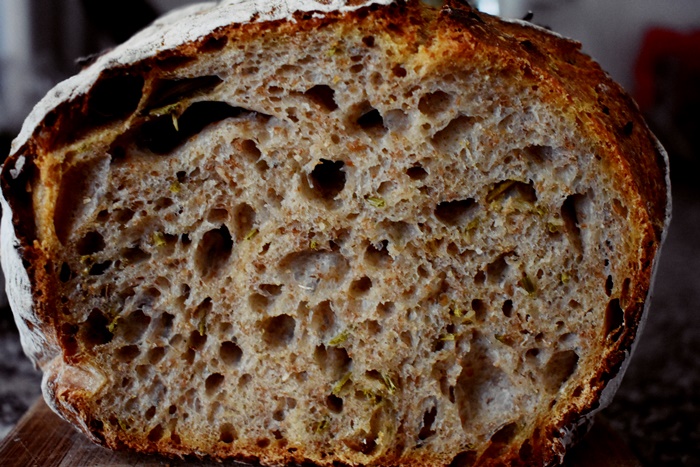
This bread is awesome warm with just some butter or as an accompaniment to mushroom soup!
Enjoy ❤
 (Fer)mental Greens
how was this?! I was just thinking…I wonder if adding spruce tips to a levain would taste good….
LikeLike
Hi Erin! It tasted like elf bread 🙂 The idea of adding it to levain is interesting, however we have to think of what leevain is- a proliferation of symbiotic lactobacteria that produce gasses that “levain” the dough.So we don’t want to introduce anything in them that might kill them or slow them down. Spruce resin has very strong antibacterial properties which would probably inhibit the growth of the lactobacteria so the levain wouldn’t be as active in this case. If yoou want to intensify the taste of spruce in the bread you can try lightly rooasting the needlees before adding to the dough, or dry and powder them to use as a condiment.If you do try it though let me know!
LikeLike